Context Debt Is The Hidden Tax On AI-Assisted Teams
AI-assisted teams do not only accumulate technical debt. They accumulate context debt.
Context debt is the cost of decisions, assumptions, standards, and project knowledge becoming scattered, stale, or unreviewed.
That cost existed before AI. It showed up as repeated questions, slow onboarding, confused handoffs, and decisions that had to be rediscovered every few months.
AI makes the cost sharper because agents move quickly. If the available context is wrong, incomplete, or out of date, the agent does not merely misunderstand the project. It may confidently act on the wrong version of the team's truth.
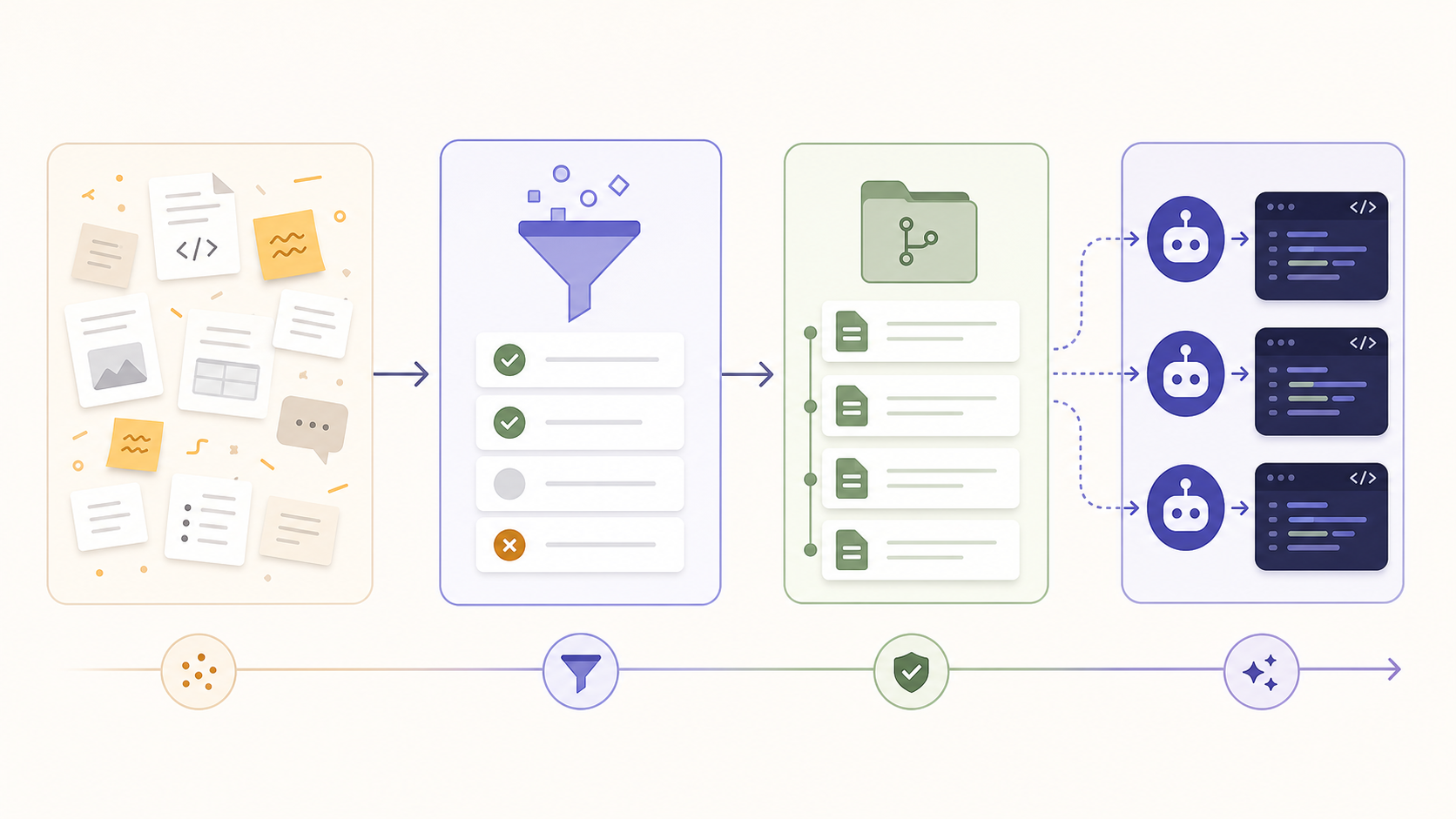
Documentation Debt Is Not The Same Thing
Documentation debt usually means the docs are missing, outdated, or hard to find.
Context debt is broader. It includes the working assumptions that never made it into docs, the decision buried in a pull request thread, the prompt that worked once but was never saved, and the team standard that everyone follows except the newest person and every new AI session.
For AI-assisted work, the problem is not just whether humans can find information. The problem is whether the team's agents can use the right information at the right moment.
The Failure Pattern
Most teams start with scattered context:
- a few notes in a wiki
- decisions in Slack or meeting transcripts
- prompts in personal chat history
- standards implied by code review comments
- architecture rationale spread across pull requests
That works while the team is small and the same people carry most of the memory.
It starts to break when the team adds more agents, more tools, more repos, more handoffs, and more restarts. Every new session asks for the same background. Every tool has a partial picture. Every handoff loses a little intent.
The result is not dramatic at first. It feels like friction.
Then it becomes drift.
Bigger Prompts Are Not Enough
One response is to paste more background into the prompt.
That can help for one session. It does not solve the system problem.
Bigger prompts do not create ownership. They do not create review. They do not preserve history. They do not distinguish a rough observation from an approved team decision. They do not help the next agent know whether a note is current, stale, speculative, or authoritative.
The better pattern is reviewed context.
Keep the important context close to the work. Make it readable by humans. Make it available to agents. Give it enough structure that decisions, tasks, risks, and handoffs can travel between sessions without becoming a private memory exercise.
Start Small
This does not require a large product surface on day one.
A practical first step is a small repo-owned context folder:
- what this repo is
- how decisions are tracked
- what is currently in flight
- what assumptions are still open
- what the next session needs to know
That is enough to reduce repeated explanations and make agent handoffs less fragile.
The goal is not perfect documentation. The goal is fewer cold starts.
Tell it once. Let it travel.